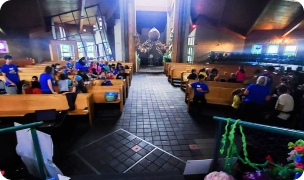
Mass schedule
Find out about mass times in your parish.
Sacraments
The Sacrament of the Anointing of the Sick
A sacrament of comfort, healing, and hope
A Christian tradition of love and compassion
Since the early days of Christianity, the sick, the elderly, and the needy have always held a central place in the life of the Church.
Like Saint Mother Teresa, Christians are called to see Christ in those who suffer and to bring them comfort and support.
The Sacrament of the Anointing of the Sick is a gift of the Holy Spirit, a source of strength and healing for those going through the ordeal of illness.
A sacrament of comfort and hope
The Anointing of the Sick is a sacrament intended to provide spiritual and physical support to people who are seriously ill or elderly. This sacrament is not a “death sentence” but, on the contrary, an “assurance of life” that unites the sick person with the Passion of Christ for their healing and salvation.
Purposes of the sacrament:
To give strength and comfort in times of trial
To forgive sins if the sick person is unable to go to confession
To prepare the sick person to meet God in peace
Who can receive the Anointing of the Sick?
People concerned
Any member of the faithful whose health is seriously impaired (illness, old age, major surgery)
People of any age, including young people facing a critical situation
Frequency
This sacrament may be received several times in one's life, in particular if the illness worsens.
Connection with confession
Many of the faithful choose to go to confession before receiving the Anointing of the Sick so as to stand before God with a purified conscience.
How is the Anointing of the Sick celebrated?
Place:
The sacrament is generally celebrated in a church, but it can also be administered at home or in hospital.
Essential rite:
The priest anoints the sick person's forehead and hands with blessed oil, speaking words of comfort and prayer.
Support:
The celebration is often accompanied by communal prayers to support the sick person.
Need help?
Do you have any questions?
For any question about the Anointing of the Sick or to prepare its celebration, contact your parish or the archdiocese.
The sacraments